Safari Overview
Step into Uganda's hidden wetland paradise on a one-day birding and
photography safari to Mabamba Wetlands, home of the prehistoric
Shoebill Stork. Glide silently through papyrus-lined canals,
spotting rare and endangered species while learning about this globally important
wetland ecosystem.
Safari Highlights
- Shoebill Stork
encounter
- Canoe safari through
papyrus channels
- 260+ wetland bird
species
- Ramsar-listed wetland
ecosystem
- Perfect for photography
Why Choose This Safari
- Perfect day trip from
Kampala
- Ideal for time-limited
travelers
- World-class birding
experience
- Expert local canoe
guides
- Important Bird Area
(IBA)
About Mabamba Wetlands
Mabamba Wetlands is not just a birding hotspot; it's a Ramsar-listed wetland and
Important Bird Area (IBA) recognized for its biodiversity and conservation
value.
With over 260 species recorded, it hosts a unique mix of papyrus specialists,
water birds, and wetland-dependent flora.
The wetland forms part of Lake Victoria's southwestern marshes near Nakiwogo
Bay.
The combination of papyrus beds, reed margins, shallow pools, and seasonal
flooding supports globally significant species.
Detailed Itinerary
Early Morning — Departure from Kampala
06:00 AM Departure
Pickup from your hotel or residence in Kampala. Enjoy the scenic countryside en
route to Mabamba with gardens, farm fields, and bushland hosting roadside
species.
Your day begins with pickup from your hotel or residence in Kampala at 06:00 AM.
Enjoy the scenic countryside en route to Mabamba: gardens, farm fields, and bushland
often host roadside species such as Abyssinian Roller and
Little Bee-eater. This is a gentle introduction to Uganda's avian
diversity, setting the tone for the wetland adventure.
Distance & Route
Distance: Kampala → Mabamba Wetlands (48.9 km via Nakawuka Rd
/ ~1 hr 30 min)
Alternative routes: 60.8 km via Mpigi Expressway or 25.6 km
from
Mpigi.
Morning — Arrival & Canoe Birding Experience
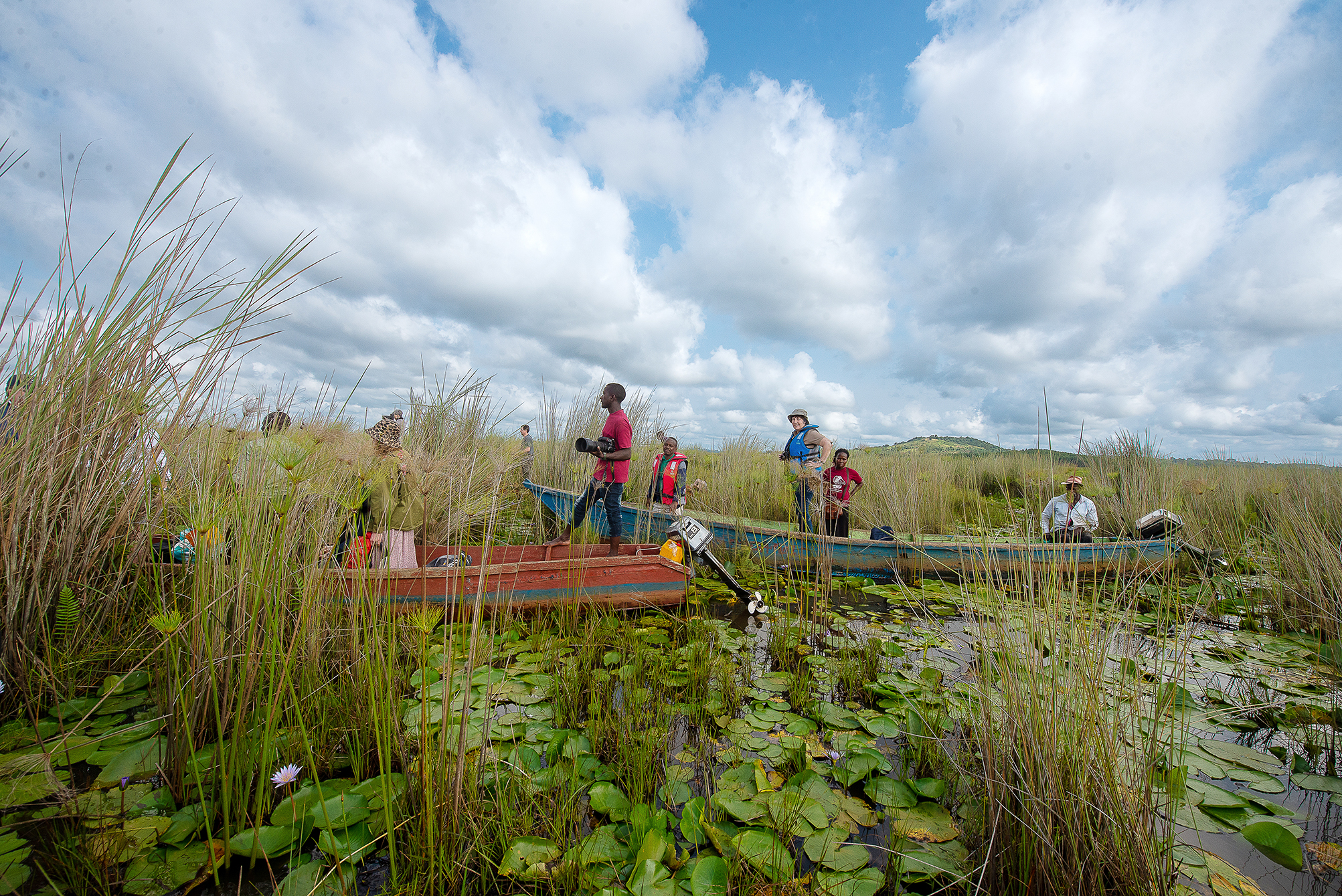
Upon arrival at Mabamba Wetlands, meet your local canoe guide and
step into a traditional dugout canoe. These papyrus-lined channels provide an
intimate
experience, bringing you close to some of Uganda's most elusive birds.
Birding Experience
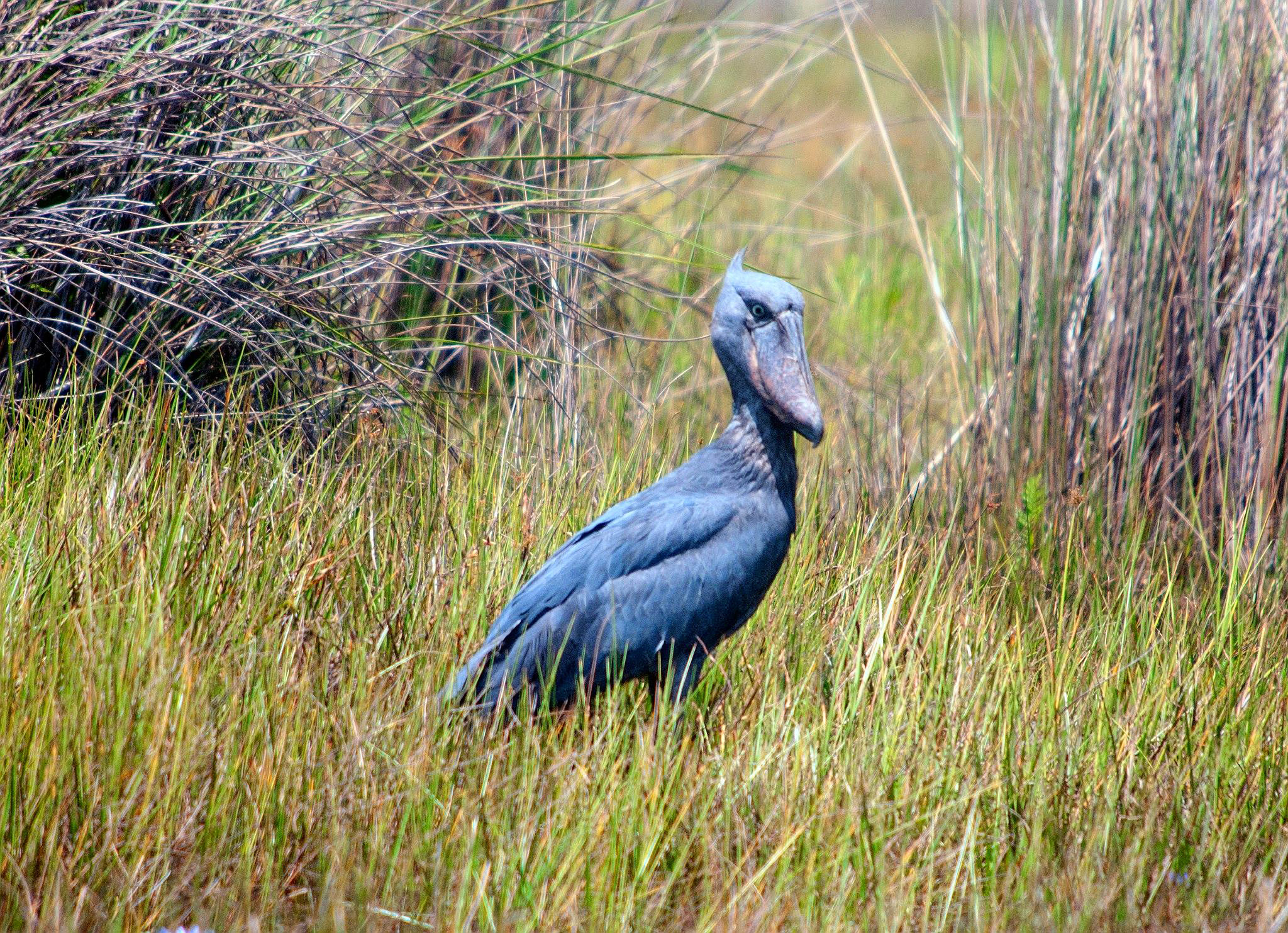
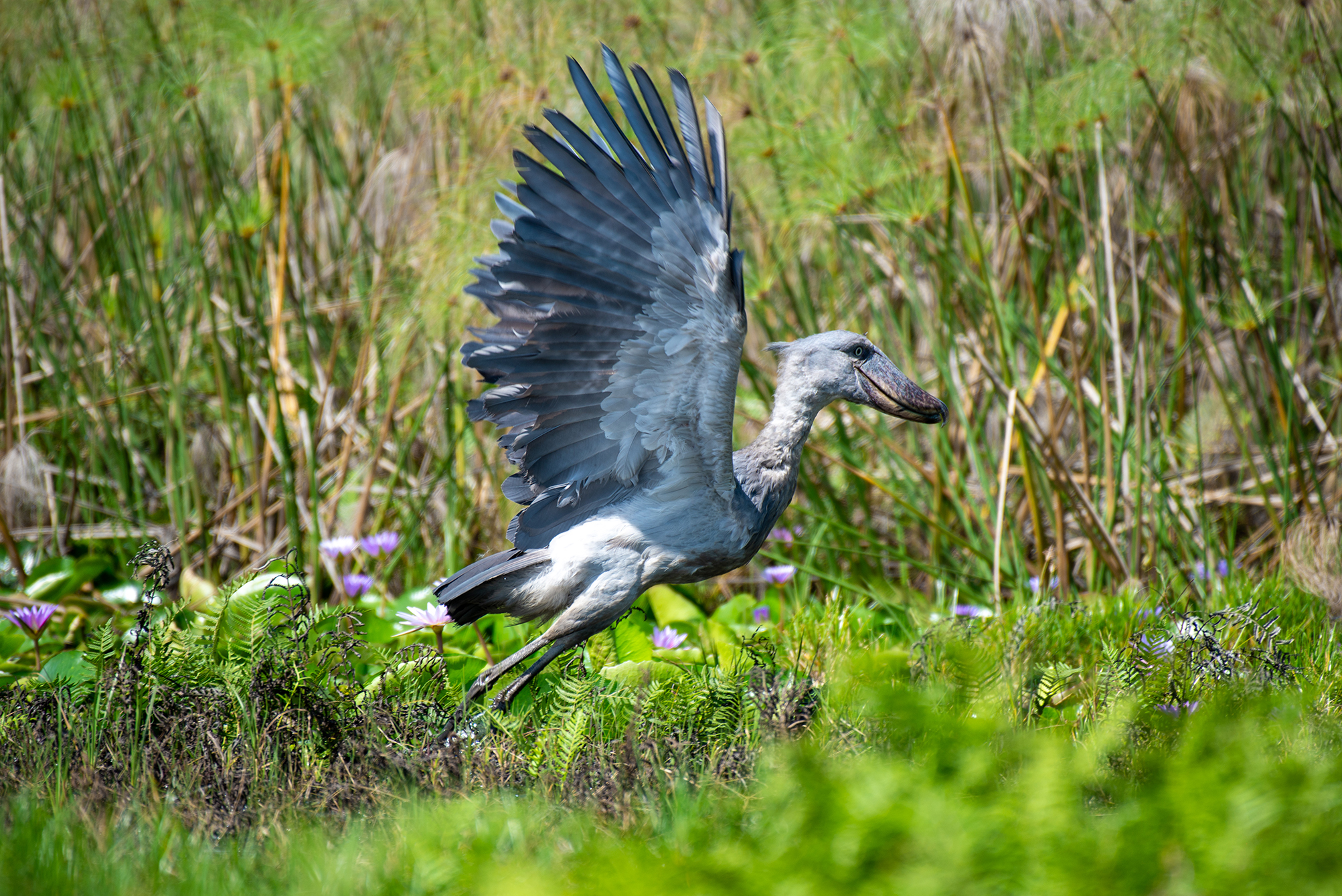
Drift silently while your guide tracks Shoebills with expert
knowledge. Watch for striking papyrus specialists and waterbirds; listen for
reed
warbler calls and scanning for motion in the water.
Target Birds — Mabamba
- Shoebill (Balaeniceps
rex)
- Great Blue Turaco
- Malachite Kingfisher
- Long-toed Lapwing
- Blue-breasted Bee-eater
- White-backed Duck
- Yellow-billed Duck
- African Green Pigeon
- Lizard Buzzard
- Long-crested Eagle
Photo Tip
Glide slowly; use long lenses (200-600mm) for shy species. Early morning light
enhances reflections and wetland colors. Bring a polarizer filter for water
reflections.
Midday — Picnic Lunch
Pause for lunch at 12:30 PM beside the marshes. Surrounded by papyrus and
waterbirds,
this break is ideal for landscape and environmental photography. Keep your
binoculars
and cameras ready — Jacanas, Marsh Harriers, and Kingfishers often forage near the
lunch spot.
Afternoon — Continued Birding & Return to Kampala
After lunch, continue to explore the wetland edges and canals, photographing and
observing species missed earlier. On departure, the drive back to Kampala includes
optional roadside stops for additional birding and capturing scenes of rural Uganda.
Arrival: Kampala ~03:30–04:00 PM
Meal Plan: Lunch included
End of Safari
Your one-day birding and photography adventure concludes with unforgettable memories
of the Shoebill Stork and Uganda's wetland wonders. Perfect for travelers with
limited time but a passion for birdlife and nature photography.
What's Included & Excluded
Included
-
Pickup & drop-off from Kampala
-
Professional guide services
-
Canoe ride with local guide
-
Entrance fees to Mabamba Wetlands
-
Packed lunch
-
Bottled drinking water
-
All applicable taxes
Excluded
-
International flights
-
Uganda visa fees
-
Personal insurance
-
Tips and gratuities
-
Personal photography equipment
-
Alcoholic beverages
-
Personal expenses (souvenirs, laundry,
etc.)
Suggested Photography Kit
Recommended Lenses
- Telephoto 200–600mm
for
birds
- Wide-angle 16–35mm for
landscapes
Essential Accessories
- Polarizer for water
reflections
- Bean bag/tripod for
canoe
stability
Best Light: 7:00–10:00 AM (soft gold), 4:00–6:00 PM (warm low
light)
Photo Gallery
Explore stunning images from this birding adventure showcasing the diverse birdlife and
beautiful landscapes you'll encounter.
Mabamba Wetlands
Exploring the papyrus channels
Shoebill Encounter
The prehistoric giant
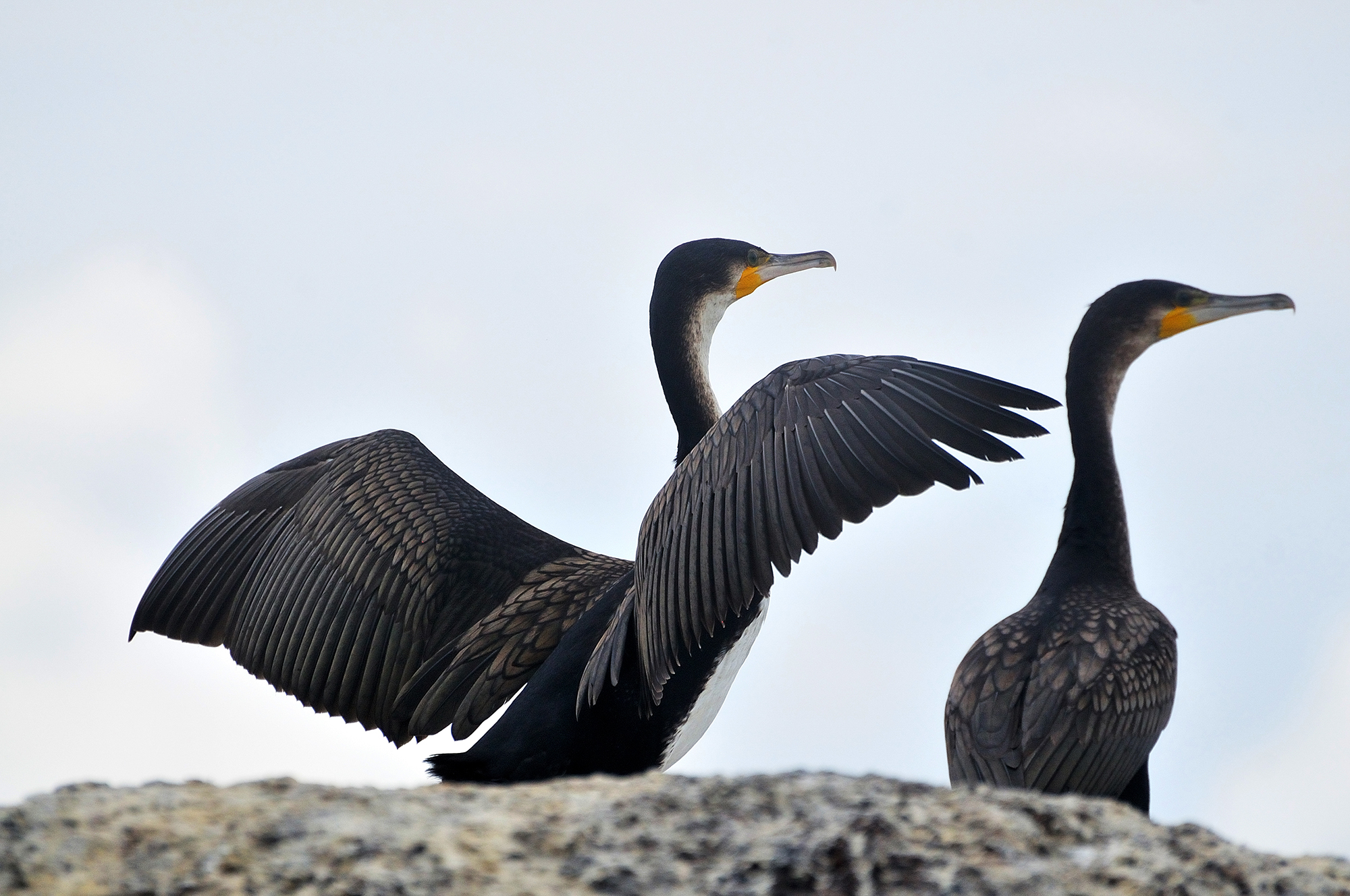
Wetland Species
Diverse birdlife in action
Photography Tips
Best photography opportunities occur during early morning light (7:00-10:00 AM) when
birds are most active. Bring a telephoto lens (400-600mm) for close-up shots and a
wide-angle lens for landscape compositions.